
In 2026, the question for brands is no longer “How do we capture attention?”
It’s “How do we earn trust at scale?”
Because attention is exhausted.
Data is constrained.
And AI is now mediating most brand–user interactions.
That’s why at ConsentPlace, we’re introducing a new series of posts:
Emotional Dynamics by Industry
A practical exploration of how Emotional Dynamics — powered by dyads — becomes the next competitive advantage in the industries where trust, decision-making, and relationship depth truly matter.
We’re starting with the industry where Emotional Dynamics isn’t just relevant.
It’s obvious.
Luxury.
Why Emotional Dynamics Is the Next Layer of Brand Intelligence
Most customer systems are still built on behavior:
- clicks
- conversion rates
- drop-offs
- engagement metrics
Useful — but incomplete.
Because human decisions are not driven by actions alone.
They’re driven by emotional forces interacting in real time.
Trust mixed with hesitation.
Curiosity mixed with fear.
Desire mixed with doubt.
That’s what we call Emotional Dynamics: the ability to understand not just what a person feels, but how emotions combine and evolve to shape a decision.
And within that model, dyads are the breakthrough.
Dyads: the real language behind decisions
Humans rarely feel one emotion at a time.
They experience blends.
Plutchik described these blends as dyads — predictable emotional combinations that create higher-order states.
In business terms: dyads reveal what most systems can’t detect:
- Alignment vs hesitation
- Hesitation vs resistance
- Readiness vs risk perception
This isn’t psychology for psychology’s sake.
This is the missing layer between:
- “engagement” and “trust”
- “intent” and “commitment”
- “conversion” and “relationship”
Episode 1 — Luxury: where Emotional Dynamics becomes a strategic weapon
Luxury has always been emotional.
Luxury is not purchased because of a feature list.
It’s purchased because of:
- identity
- confidence
- belonging
- anticipation
- pride
- trust
And luxury clients don’t just buy products.
They buy reassurance.
They buy meaning.
They buy certainty.
The problem?
Luxury is going digital-first.
But luxury expectations remain human-level.
This is the gap ConsentPlace was built to close.
Luxury doesn’t need more personalization — it needs emotional precision
Most luxury stacks can personalize:
- language
- product recommendations
- pricing
- content sequences
But luxury decisions aren’t blocked by lack of content.
They’re blocked by emotional friction:
- “Is this really right for me?”
- “Is it worth it?”
- “Do I trust this brand?”
- “Do I want to commit now?”
- “Am I being pushed?”
In luxury, the difference between conversion and drop-off is rarely rational.
It’s emotional.
How dyads show up in luxury (and what brands should do about it)
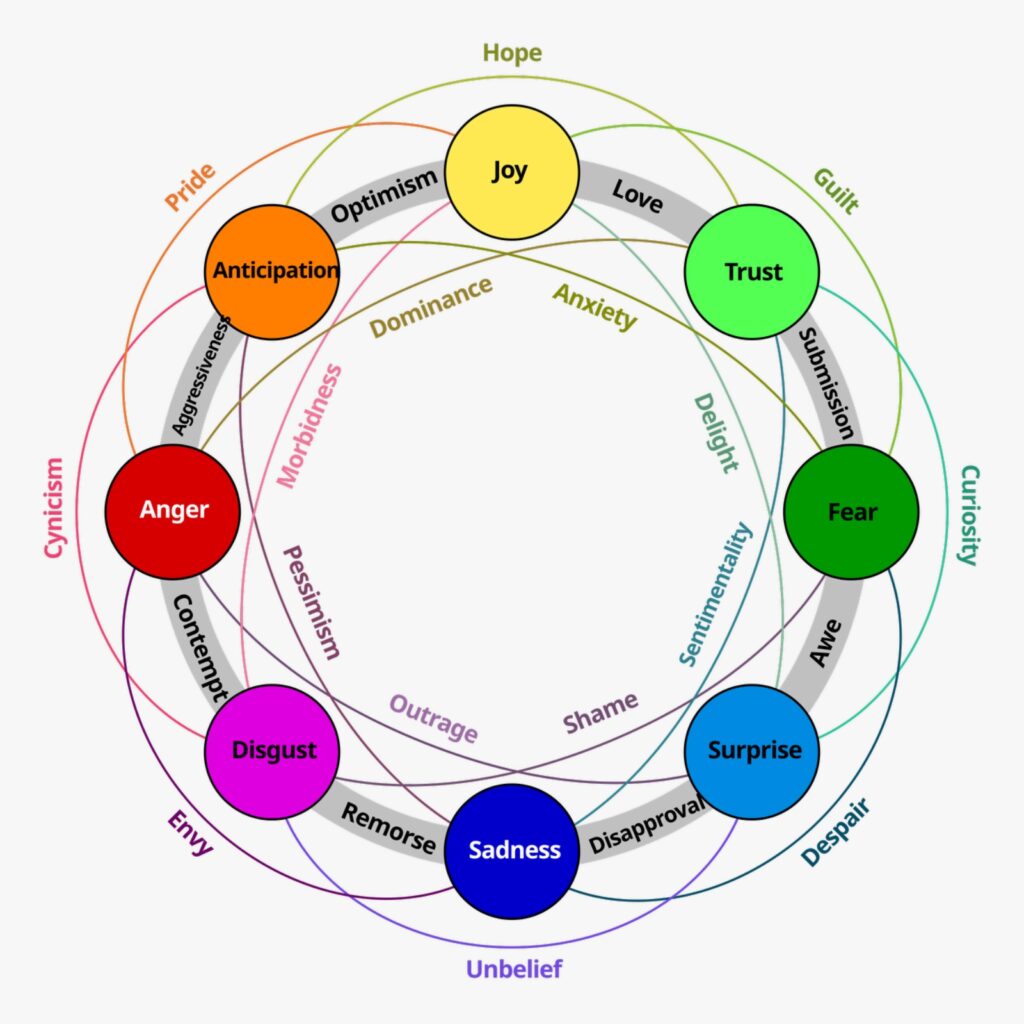
1) Primary Dyads — moments of alignment
These are strong, stable blends.
The client is emotionally ready.
Examples:
- Anticipation + Joy → Optimism
- Joy + Trust → Attachment
Brand move: protect momentum.
Less pressure. More elegance. Smooth flow. Earned consent.
2) Secondary Dyads — moments of hesitation
The client is interested, but emotionally negotiating.
Examples:
- Trust + Surprise → Curiosity
- Joy + Fear → Guilt / risk tension
Brand move: clarify without selling harder.
Reassure without sounding defensive. Guide without pushing.
This is where most brands lose the client.
Not because the product fails — because the interaction does.
3) Tertiary Dyads — moments of conflict
Rare, unstable blends where pushing breaks trust.
Examples:
- Joy + Sadness → Bittersweet
- Trust + Disgust → emotional blockage
Brand move: slow down and restore clarity.
Respect, control, dignity.
Luxury should never feel forced.
Why this is mandatory for luxury brands now
Luxury is entering an era where:
- every interaction must feel bespoke
- every digital moment must feel human
- every consent request must preserve dignity
- every hesitation must be handled with precision
The brands that win will not be the ones that automate the most.
They will be the ones that understand the emotional structure of the decision.
That is Emotional Dynamics.
What ConsentPlace delivers — without compromising luxury
ConsentPlace doesn’t replace luxury storytelling.
It amplifies it with intelligence that respects the client.
By interpreting emotional dynamics through dyads, ConsentPlace allows luxury brands to:
- detect trust-building moments vs hesitation moments
- adapt conversations in real time
- earn explicit consent without pressure
- turn digital touchpoints into long-term relationships
It’s not about “more marketing.”
It’s about higher-quality relationships.
At scale.
Coming next in the series
Luxury is only the beginning.
Next industries we’ll explore through the lens of Emotional Dynamics:
- Automotive
- Travel & hospitality
- Healthcare
- Finance
- Retail & e-commerce
- Enterprise SaaS
- … and more…
Because as AI becomes the front door to every brand, emotional dynamics becomes the foundation of trust in every market.
📚 Research & References
💎 The Great Luxury Contraction (2024-2025)
- Bain & Company + Altagamma (2025) — €1.44T market, 50M consumer exodus, 340M remaining buyers
- McKinsey (2025) — State of luxury goods: 1-3% projected growth (2024-2027)
- YouGov BrandIndex (2025) — 25% drop in consideration (Jan-April 2025)
- Mintel: US Luxury Consumer (2025) — 60% buying fewer items, 50%+ feel quality doesn’t justify cost
💔 The Emotional Crisis in Luxury
- Deloitte (2025): Emotionally aligned brands grow 2.2x faster + 23% higher pricing power
Cited in: Lifestyle.INQ (2026) - Ogury Survey (2025) — 7,500 consumers: 40% scrutinize purchases more closely
- theHRD (2025) — Emotional connection > exclusivity alone
🎯 Consumer Behavior & Generational Shifts
- Mintel: Luxury Retail Trends (2025) — 80% of market will be Gen Z + Millennials by 2030
- DATA&DATA (2025) — 60% of Gen Z China would delay purchase vs. downgrade brand
- GWI (2025) — Luxury buyers: anxiety rose since 2020, overworked sentiment
- Research the Affluent (2025) — Survey of 200 affluent consumers ($200K+ income)
🧠 Emotional Branding & AI in Luxury
- Corrado Manenti (2025) — 7 key luxury marketing trends: emotional resonance critical
- ScienceDirect (2025) — AI assistants in luxury: social presence + emotional appeal drive adoption
- Arvisus (2025) — Consumer behavior: emotional connection > status symbols
- The Future of Luxury CX (2025) — AI-powered personalization, endowment effect
📖 Academic: Brand Love & Consumer Psychology
- Journal of Marketing Management (2023) — Brand love drivers: uniqueness, hedonism, prestige, symbolism
- The New Luxury Equation (2025) — Consumer values & market preferences (Kuwait vs. UK study)
- Batra, Ahuvia & Bagozzi (2012) — “Brand love” foundational research. Journal of Marketing, 76(2), 1-16
🎨 Emotion Theory Framework
- Plutchik, R. (2001) — “The Nature of Emotions.” American Scientist, 89(4), 344-350
- Plutchik, R. (1980) — “A general psychoevolutionary theory of emotion.” Academic Press
- Six Seconds (2025) — Plutchik’s Wheel visualization + applications
- Semeraro et al. (2021) — PyPlutchik: Emotion annotation. PLOS ONE
🎭 The Luxury Dyads Framework
Applying Plutchik’s Wheel of Emotions to luxury consumer behavior reveals critical emotional patterns driving the €1.44T market:
- Love (Joy + Trust): Heritage collectors, “big spenders” (€165B, 45% of market) — Resilient to price increases
- Remorse (Sadness + Disgust): ⚠️ FASTEST GROWING — 60% buying fewer items, 50%+ feel quality doesn’t justify cost
- Optimism (Anticipation + Joy): Waitlist customers, Gen Z savers (60% delay vs. downgrade)
- Contempt (Disgust + Anger): ⚠️ 50M market exiters — “Brands raised prices 40% in 2 years”
- Awe (Fear + Surprise): Immersive flagship moments (Golden Goose customization tables)
- Submission (Trust + Fear): FOMO buyers, fragile “must-have” compliance
- Guilt (Joy + Fear): “I love this but is it too expensive/wasteful?” — Aspirational consumer’s core conflict, drives quiet luxury
- Pride (Anger + Joy): “I earned this, I deserve it” — Self-gifters, milestone buyers (Millennial peak earners)
- Envy (Sadness + Anger): Social media aspiration — “I wish I could afford what they have”
- Curiosity (Trust + Surprise): Brand discovery — 50%+ via social media first
- Anxiety (Anticipation + Fear): First-time luxury buyers — “Is this the right investment?”
- Cynicism (Disgust + Anticipation): “Luxury brands keep raising prices without adding value”
- Shame (Fear + Disgust): Hiding logos, removing shopping bags — DRIVES QUIET LUXURY TREND
- Delight (Joy + Surprise): Unexpected personalization (embroidered initials) — Creates viral moments
- Outrage (Surprise + Anger): “$2K price increase overnight?!” — Social media firestorm risk
- Pessimism (Sadness + Anticipation): “Luxury will become unaffordable” — Market exiters
- Sentimentality (Trust + Sadness): “Luxury meant something when my parents bought it”
- Aspirational Guilt (Joy + Fear + Anticipation): “I’ve saved for months — I hope people don’t think I’m wasteful” — Mass market luxury segment
- Entitled Contempt (Anger + Disgust + Anticipation): ⚠️ EXISTENTIAL THREAT — Caused 50M to exit market
- Nostalgic Pessimism (Sadness + Anticipation + Trust): Generational divide, heritage brand tension
- Joyful Awe (Joy + Surprise + Trust): IDEAL STATE — Aston Martin showrooms, brand evangelists (McKinsey: 4.2x engagement)
- Conflicted Pride (Joy + Anger + Fear): “I earned this watch but I hate justifying it” — Millennials with values guilt
📊 DISTRIBUTION: Primary Dyads: 55% (Remorse 20%, Love 15%) | Secondary Dyads: 35% (Guilt 15%, Pride 8%) | Tertiary Dyads: 10% (Shame 4%)
✨ Success Stories: Emotion-Led Luxury Brands
🏆 RICHEMONT (Cartier, Van Cleef & Arpels)
Q4 2024: €6.15B sales (+10% YoY) — RECORD
Strategy: Jewelry focus (4-6% growth), emotional customization, heritage storytelling
Dyad: Maximized LOVE (Joy + Trust) through timeless design
🤫 LORO PIANA — Quiet Luxury Champion
Strategy: Zero logos, maximum quality, whisper campaigns
Dyad: Converted SHAME → PRIDE (understated wealth)
🏎️ ASTON MARTIN — 21% Sales Increase
Strategy: Emotion-led marketing (beauty, history, feelings > specs)
Dyad: Activated AWE + PRIDE
🌿 AESOP — Community Through Sensory Design
Strategy: Sculptural stores, slow rituals, visual storytelling
Dyad: Created LOVE through immersion
💡 Transform Luxury Customer Intelligence
ConsentPlace’s Emotional Dynamics Platform helps luxury brands:
- Detect Remorse before post-purchase regret (60% buying fewer items)
- Convert Guilt → Pride through values-aligned narratives
- Prevent Contempt cascade (50M consumer exodus)
- Activate Joyful Awe (McKinsey: 4.2x engagement)
- Achieve 2.2x growth through emotional alignment (Deloitte)
Methodology: Framework synthesizes 23 luxury market reports, consumer behavior studies, and academic research (2022-2026) from Bain, McKinsey, Deloitte, Mintel, YouGov with Plutchik’s emotion theory (1980, 2001). Luxury-specific dyad applications based on €1.44T market analysis and 50M consumer exodus patterns. Full reference compilation available.
The Bottom Line
Luxury has always been emotional.
Now it must become emotionally intelligent — and emotionally dynamic.
This is the first post in our new series: Emotional Dynamics by Industry.
Luxury is Episode 1.
And the future of brand–user relationships will be built here.
Question?
(and use this form to subscribe to this newsletter… and receive the next episodes on other industries!)
This is a really interesting shift in thinking about branding! It makes so much sense that earning trust is becoming the key priority in this new landscape.