
As we enter 2026, Direct Brand–User Relationships can no longer be built on extraction.
Consent is a conversation, and Emotional Intelligence is now the minimum requirement to earn trust responsibly.
But real decisions are never driven by a single emotion.
They emerge from emotional interactions.
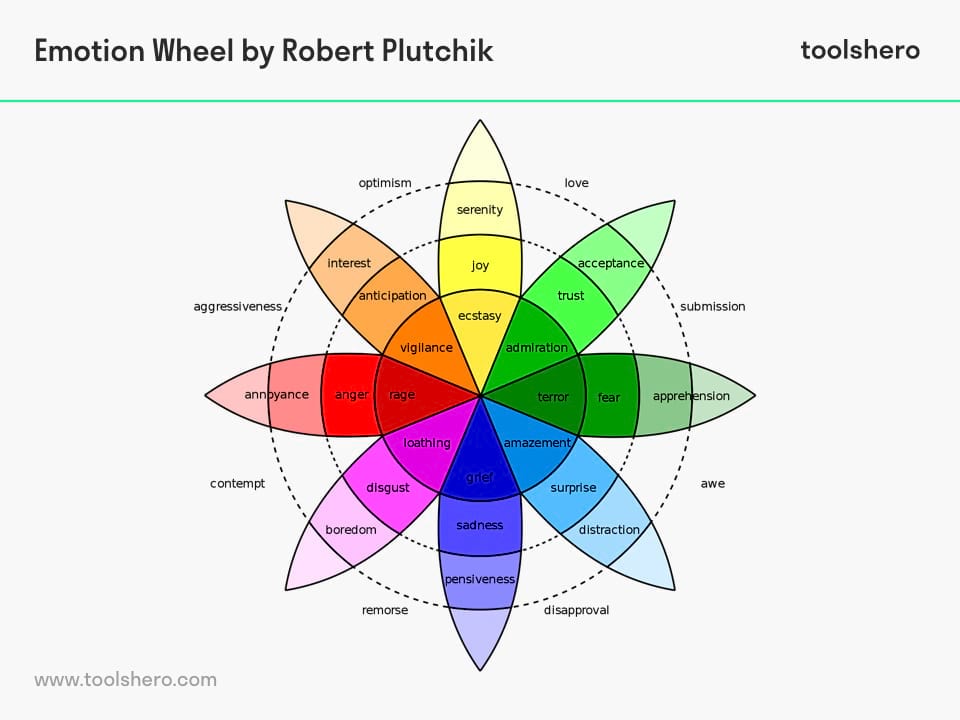
To understand those interactions, ConsentPlace relies on Plutchik’s Wheel of Emotions — not as a static taxonomy, but as a dynamic model of how emotions relate, oppose, and combine in real decision-making.
Plutchik’s model exposes what most systems miss: decisions emerge from emotional interactions, not isolated signals.
By modeling these dyads, ConsentPlace understands when emotions reinforce trust, introduce hesitation, or signal resistance — and adapts the conversation accordingly.
This is emotional understanding in motion — what we call at ConsentPlace — Emotional Dynamics.
How it works:
Emotion Blending in Plutchik’s Wheel of Emotions
One of the most powerful aspects of Robert Plutchik’s Wheel of Emotions is emotion blending (also called dyads). Just like mixing primary colors creates new shades, combining primary emotions produces more complex, nuanced feelings we experience every day. The eight primary emotions—Joy, Trust, Fear, Surprise, Sadness, Disgust, Anger, and Anticipation—are arranged in a circle. The closeness of emotions on the wheel determines how naturally and intensely they blend. There are three levels of blending based on distance:
- Primary Dyads (adjacent emotions – strongest, most common blends)
- Secondary Dyads (emotions one step apart – common but slightly less intense)
- Tertiary Dyads (emotions two steps apart or opposites – rarer, more conflicted)
Here are clear examples of each:
1. Primary Dyads (Adjacent Emotions – Most Frequent)
These feel natural because the emotions are closely related:
- Joy + Trust → Love
A warm, affectionate bond (e.g., romantic love, deep friendship). - Trust + Fear → Submission (or Admiration/Awe)
Yielding to someone or something more powerful out of respect (e.g., looking up to a mentor). - Fear + Surprise → Awe (or Alarm)
Being overwhelmed by something vast or sudden (e.g., standing before a massive waterfall). - Surprise + Sadness → Disapproval
Shock at something unpleasant or wrong (e.g., hearing disappointing news). - Sadness + Disgust → Remorse
Deep regret over something shameful (e.g., guilt after hurting someone). - Disgust + Anger → Contempt
Looking down on someone with disdain (e.g., scorn toward unethical behavior). - Anger + Anticipation → Aggressiveness (or Dominance)
Drive to confront or compete (e.g., competitive energy in sports). - Anticipation + Joy → Optimism
Hopeful excitement about the future (e.g., looking forward to a vacation).
2. Secondary Dyads (One Emotion Apart – Less Common)
These blends skip one emotion, creating more complex feelings:
- Joy + Fear → Guilt
Pleasure mixed with anxiety about consequences (e.g., enjoying something you feel you shouldn’t). - Trust + Surprise → Curiosity
Interest sparked by something unexpected but safe. - Fear + Sadness → Despair
Hopeless resignation (e.g., giving up after repeated failure). - Surprise + Disgust → Shock or Horror
Sudden revulsion (e.g., witnessing something grotesque). - Sadness + Anger → Envy or Bitterness
Resentment toward others’ success while feeling down. - Disgust + Anticipation → Cynicism
Expecting the worst due to past negative experiences. - Anger + Joy → Pride
Satisfaction from achievement, sometimes with triumph over others. - Anticipation + Trust → Faith or Hope
Confident expectation of positive outcomes.
3. Tertiary Dyads (Opposites or Far Apart – Rarest, Most Conflicted)
These are the hardest to feel simultaneously because the emotions contradict:
- Joy + Sadness → Bittersweet
Happiness tinged with sorrow (e.g., a child leaving home for college). - Trust + Disgust → Rare or suppressed (almost impossible to feel strongly at once).
Opposites tend to cancel each other out rather than blend easily.
Why Emotion Blending Matters in Real Life (and AI)
In everyday interactions—like during a ConsentPlace conversation—people rarely feel just one pure emotion. A user might feel optimism (anticipation + joy) about a reward but also guilt (joy + fear) about sharing data. Recognizing these blends allows for truly empathetic responses: acknowledging hesitation while gently building excitement.Plutchik’s blending system gives AI (like ConsentPlace’s Emotional Intelligence engine) the ability to understand and respond to the full complexity of human feelings—not just “happy” or “angry,” but the rich, layered emotions that drive real decisions.This is why emotion blending isn’t just theory—it’s the key to building trust, one nuanced conversation at a time.
Questions?
This is a really fascinating perspective, it’s great to see how Plutchik’s Wheel is being applied to build more meaningful relationships.